
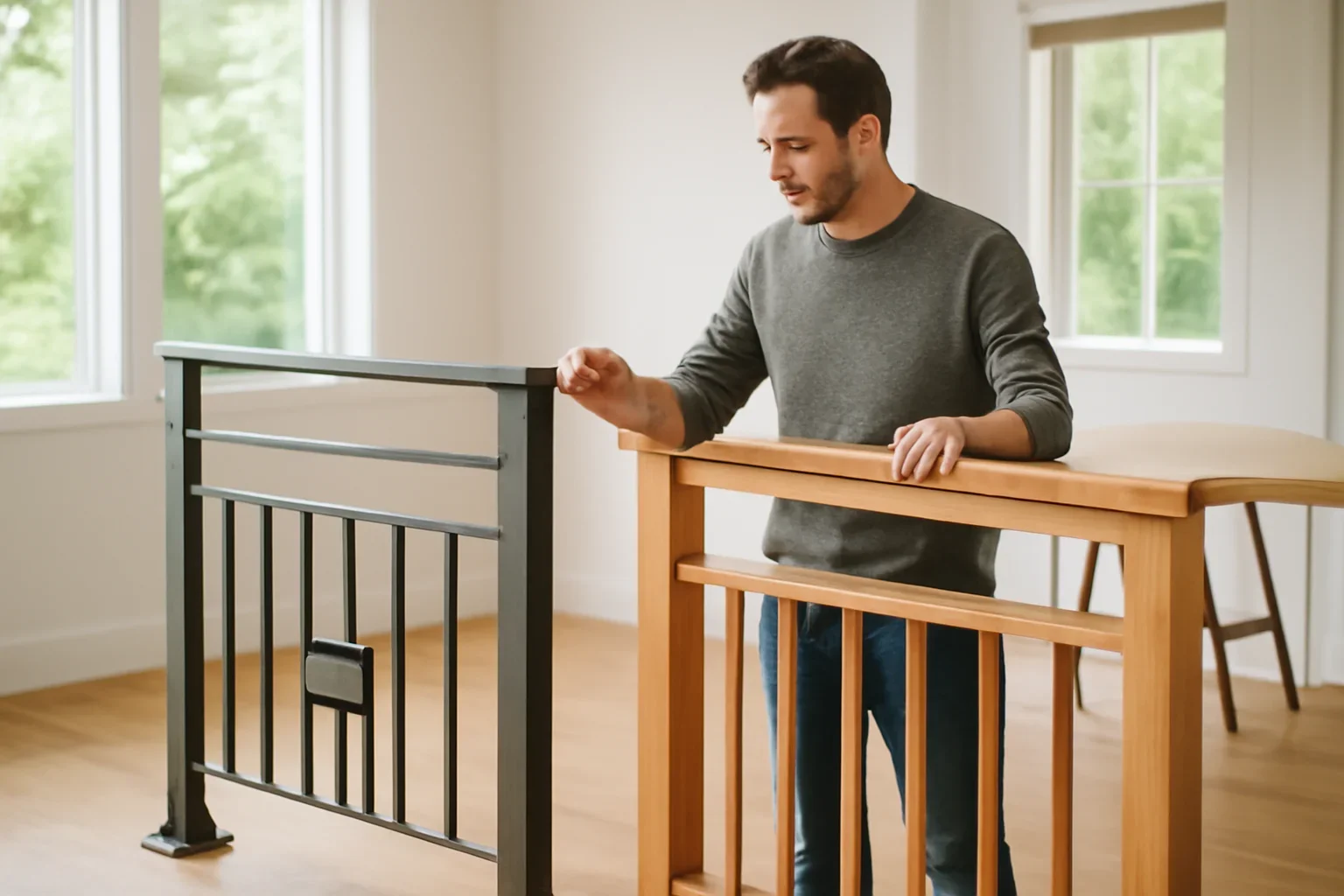
Seattle railing comparison

Steel railings vs wood railings

Steel and wood railings can both support a well-designed staircase, balcony, deck or entry, but they create different visual and maintenance outcomes. Steel is often selected for slimmer lines, custom detailing and demanding exterior conditions. Wood offers natural warmth and can fit naturally with traditional or wood-focused interiors. The better choice depends on the location, architecture, exposure, railing design and level of upkeep the property can support.

  • Interior and exterior railings
  • Seattle and Puget Sound context
  • Residential and commercial projects
  • Design, cost and maintenance factors
Steel and wood railing materials being compared for a Seattle architectural project
Which railing material is better?

Steel often fits modern, custom or exterior applications that need slimmer profiles and controlled detailing. Wood may be the better fit when warmth, traditional character or coordination with existing millwork is the priority.

  • Modern visual direction Steel often creates cleaner lines
  • Warm traditional character Wood may feel more natural
  • Exterior exposure Both need correct detailing
  • Best overall value Depends on the complete assembly
At-a-glance comparison

How steel railings and wood railings differ

A railing should be evaluated as a complete system. Posts, guards, handrails, infill, fasteners, finishes and connections all affect appearance, durability and daily use.

Steel railings

Precise lines with broad custom-design flexibility

Steel can create a visually lighter guard system while supporting custom layouts, profiles, connection details and coordinated architectural metalwork.

  • Well suited to modern, industrial and minimalist architecture
  • Can use slim posts, flat bars, pickets, panels or custom-pattern infill
  • Coordinates naturally with steel stairs, gates, doors, canopies and other metal features
  • Can be fabricated around unusual dimensions, slopes and transitions
  • Offers multiple finish directions, including paint, powder coating and selected specialty finishes
Often considered for

Feature stairs, open interiors, balconies, decks, commercial entries and exterior applications requiring a tailored railing system.

Wood railings

Natural warmth with familiar residential detailing

Wood railings can coordinate closely with flooring, cabinetry, trim and traditional stair components while bringing visible grain and a softer material character.

  • Fits naturally with traditional and transitional interiors
  • Can match hardwood floors, trim, stair treads and other millwork
  • Offers many species, stains, profiles and decorative details
  • Can be repaired or refinished when surface wear is limited and the underlying material remains sound
  • Exterior wood requires careful species, finish, drainage and maintenance decisions
Often considered for

Traditional homes, wood-focused interiors, heritage-style renovations and projects where natural material character is central to the design.

Detailed comparison

Compare appearance, maintenance, exposure and project fit

These are general planning differences. Actual performance depends on the design, material grade, connections, fabrication, installation, finish system and ongoing care.

Decision factor Steel railings Wood railings
Visual character Crisp, structural and compatible with contemporary, industrial or minimalist spaces. Warm, natural and compatible with traditional, transitional or wood-rich interiors.
Profile and openness Can use slimmer members and controlled spacing for a more open visual result. May use thicker posts, rails or decorative components depending on the design.
Custom design Strong flexibility for unusual angles, custom infill, transitions and coordinated metal features. Strong flexibility for carved details, turned balusters, profiles and coordinated millwork.
Interior wear Finished steel is generally easy to clean, but chips or scratches should be repaired when they expose the base material. Wood may show dents, scratches and hand-contact wear, but many surfaces can be sanded or refinished.
Exterior moisture Requires appropriate material, coating, drainage, connection and maintenance planning. Requires appropriate wood species, sealing, drainage, ventilation and regular finish maintenance.
Site fit Can be fabricated around measured stairs, landings, slopes, decks and irregular conditions. Can also be customized, but movement and weather exposure should be considered in detailing.
Project coordination Often involves field measurements, shop drawings, fabrication lead time and finish coordination. May involve carpentry, millwork, staining, painting and coordination with the broader stair assembly.
Cost Depends on design complexity, steel quantity, finish, drawings, delivery and installation. Depends on wood species, profiles, decorative detail, finish work and installation complexity.
Seattle and Puget Sound realities

Local exposure and building conditions can influence the better railing material

Seattle-area projects can involve frequent rain, shaded exterior areas, older homes, sloped properties and renovation conditions that are not perfectly square or level. Material selection matters, but drainage, connection details, finish protection and access for future maintenance are just as important.

  • Exterior railings should avoid details that trap water or debris against vulnerable surfaces
  • Older stairs, porches and decks may require field verification before railing dimensions are finalized
  • Hillside properties may involve long runs, changing elevations and unusual landing conditions
  • Urban homes can have limited delivery, staging and installation access
  • Interior remodels often require new railings to connect cleanly with existing floors, stairs and walls

Material alone does not determine durability

A well-designed exterior system considers water movement, finish selection, post connections, dissimilar materials and how damaged areas can be inspected or maintained. These details should be reviewed for the actual project location.

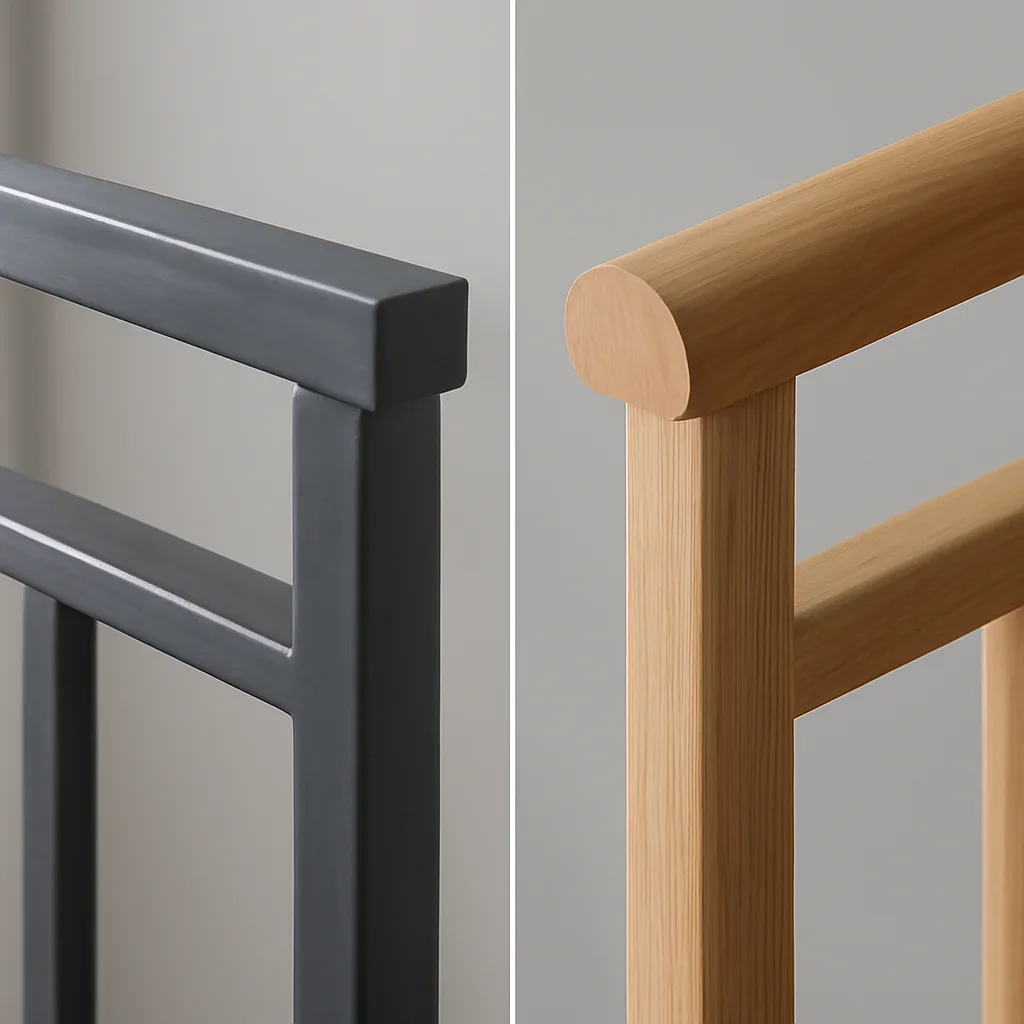
Close detail comparing a finished steel railing with wood railing materials for a Seattle project
Decision framework

Four questions that can clarify the right railing direction

A useful material decision connects the desired appearance with the real location, exposure, maintenance plan and surrounding architecture.

1

Is the railing inside or outside?

Interior railings face hand contact and daily wear. Exterior railings also face rain, moisture, debris and seasonal exposure.

2

How visible is the railing?

A central stair or front entry may justify greater design control than a utility railing in a less visible location.

3

What must it coordinate with?

Review stairs, flooring, decks, siding, walls, gates, glazing, landscaping and other nearby materials.

4

What maintenance is realistic?

Consider cleaning, finish repair, refinishing, moisture exposure and how easily every part of the system can be inspected.

Cost and long-term upkeep

Are steel railings more expensive than wood railings?

There is no dependable material-only answer. A straightforward wood railing may cost less than a highly customized steel system, while premium hardwood, detailed balusters and extensive finish work can also create a substantial project.

Compare the complete installed railing, including posts, handrails, infill, drawings, finish, delivery, installation and expected maintenance. The lowest initial price does not always produce the lowest long-term cost.

Choosing by project goal

When steel or wood may be the stronger fit

Neither material is automatically superior. The stronger choice is the one that fits the architecture, exposure, detailing requirements and maintenance expectations.

Steel railings may be worth considering when:

  • The project calls for slim or visually open profiles
  • The railing is a prominent architectural feature
  • The design includes custom angles or transitions
  • The railing must coordinate with other metalwork
  • The preferred look is modern or industrial
  • A tailored exterior railing system is required

Wood railings may be worth considering when:

  • The interior already has substantial wood detailing
  • The design direction is traditional or transitional
  • Matching flooring or stair treads is important
  • Decorative millwork is central to the design
  • The railing is protected from demanding exposure
  • Future sanding or refinishing is a priority
Common questions

Steel railings vs wood railings FAQs

Practical answers for Seattle-area homeowners, architects, builders and property teams comparing railing materials.

Are steel railings stronger than wood railings?

Both materials can form a safe railing when properly designed, connected and installed. Steel can provide substantial strength through relatively slim members, while wood systems depend on the selected species, component sizes, fastening and protection from deterioration.

Are steel railings more expensive than wood railings?

Not in every project. Custom steel fabrication and finishing can increase cost, but premium hardwood, decorative profiles and detailed finish work can also be expensive. Compare the complete installed system.

Which railing material requires less maintenance?

Maintenance depends on location and finish. Interior finished steel may need limited routine care, while exterior steel should be inspected for finish damage. Wood may require cleaning, sealing, staining or refinishing, especially when exposed to moisture and sunlight.

Are steel railings better for Seattle weather?

Steel can work well outdoors when the material, coating, drainage, connections and maintenance plan are suitable for the exposure. Wood can also perform outdoors when the species, treatment, sealing and construction details are appropriate. Neither material should be selected without considering the full assembly.

Can steel railings be combined with a wood handrail?

Yes. A steel guard can be paired with a wood cap or handrail to combine slimmer structural lines with a warmer touch surface. Attachment, wood movement and finish compatibility should be planned carefully.

Which option is better for a modern Seattle home?

Steel is often considered for modern homes because it can create slimmer posts, cleaner lines and custom transitions. Wood may still be the stronger fit when the home has warm finishes, traditional detailing or substantial existing millwork.

Do I need drawings before requesting a railing quote?

Finished drawings are not always necessary for the first conversation. Photos, approximate dimensions, the project address and a description of the stairs, balcony, deck or landing can help begin the review. Field verification or detailed drawings may be needed before fabrication.

Can you help determine whether steel railings fit our project?

Yes. Share the project type, location, photos, available dimensions, drawings and preferred design direction. An initial review can help identify whether custom steel railings are a practical fit and what information may be needed next.

Get a project-specific answer

Considering custom steel railings for your project?

Send the project location, photos, approximate dimensions, drawings and design references. The team can review the initial scope and help identify the most useful next step.

Include whether the railing is interior or exterior, the Seattle-area project location, approximate railing length and any available stair, deck or balcony measurements.

Steel and wood railing consultation with architectural drawings, finish samples and material selections