Metal material and finish guidance

Choose metal for the project, exposure and finished result

Steel, stainless steel and aluminum can all produce strong custom metalwork, but they do not behave, finish or age in the same way. We help Seattle-area homeowners, architects, builders and property teams compare the options against the actual site, design intent, maintenance expectations and fabrication requirements.

  • Interior and exterior use
  • Seattle moisture exposure
  • Finish and maintenance planning
  • Residential and commercial work
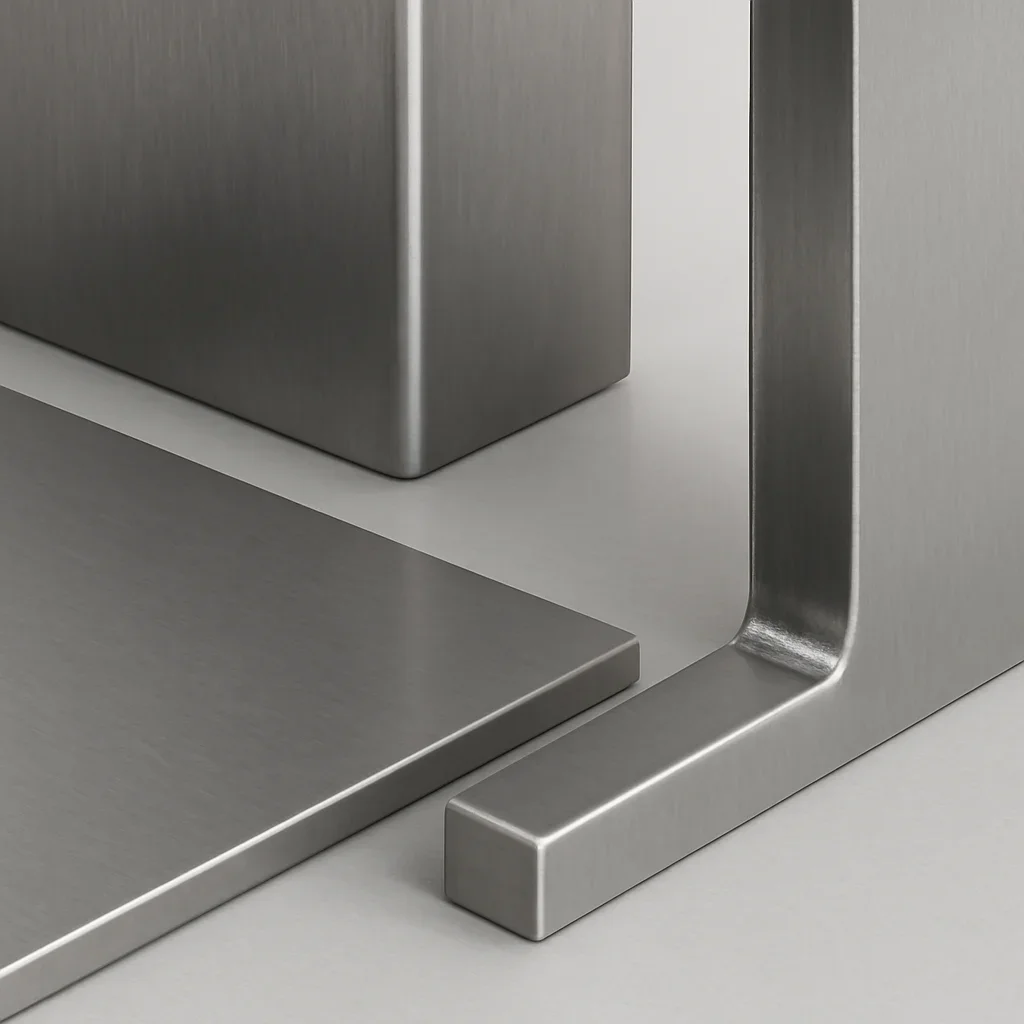
Steel, stainless steel and finish samples reviewed for a custom Seattle metal fabrication project
There is no universal best metal. The right choice depends on where the feature will be installed, how it will be used, how it should look and how much maintenance is acceptable.
  • Environment Interior, exterior, covered or exposed
  • Performance Strength, weight and expected use
  • Appearance Texture, colour, sheen and design intent
  • Maintenance Cleaning, coating care and future access
Direct answer

What is the best material for custom metalwork in Seattle?

For many architectural projects, the best choice is the material and finish combination that matches the exposure, structural requirements, design direction and maintenance plan.

Powder-coated steel is often considered for custom stairs, railings, gates and architectural features where strength and design flexibility matter. Stainless steel can be useful where a clean metallic appearance or increased corrosion resistance is a priority. Aluminum can be useful where lower weight and corrosion resistance are important.

The final selection should be confirmed against the drawings, connection details, site conditions, finish system, budget and installation plan rather than chosen from appearance alone.

Compare the primary options

Steel, stainless steel and aluminum serve different project goals

These summaries provide a practical starting point. Final material thicknesses, grades, connections and finish systems should be based on the approved project scope.

Design flexibility

Carbon Steel

Steel is a versatile option for custom stairs, railings, gates, frames, canopies and feature metalwork. It can support refined, minimal details or heavier architectural forms.

  • Often considered for Stairs, railings, gates, structural frames and custom features
  • Appearance Can be painted, powder coated, patinated or integrated with other finish systems
  • Planning point Exterior steel needs a complete finish and drainage strategy
  • Maintenance Coatings should be inspected and repaired if damaged
Explore Steel Fabrication
Clean metallic finish

Stainless Steel

Stainless steel is often selected when corrosion resistance, exposed metal appearance and clean detailing are important. Grade and finish direction should match the actual environment.

  • Often considered for Handrails, guards, trim, exposed details and higher-moisture areas
  • Appearance Brushed, satin, polished or project-specific surface finishes
  • Planning point Grade, weld treatment and surface direction affect performance and appearance
  • Maintenance Requires cleaning suited to the finish and exposure
Explore Stainless Steel Fabrication
Lower weight

Aluminum

Aluminum can be useful for canopies, screens, panels, gates and selected exterior features where lower weight and corrosion resistance support the design and installation plan.

  • Often considered for Screens, panels, canopies, gates and lighter exterior assemblies
  • Appearance Commonly powder coated, anodized or finished for a clean modern expression
  • Planning point Section size, welding and movement differ from steel
  • Maintenance Finish care depends on coating type and environmental exposure
Ask About Aluminum Options
Decision factor
Steel
Stainless steel
Aluminum
Typical design strength
Strong and highly versatile for custom assemblies
Strong with grade-specific design considerations
Lightweight; sections may differ from equivalent steel work
Exposed appearance
Usually relies on a selected coating or decorative finish
Can remain visibly metallic with brushed or polished finishes
Commonly powder coated or anodized
Exterior planning
Needs careful coating, drainage and maintenance planning
Grade and surface treatment should match the exposure
Naturally corrosion resistant but still needs compatible detailing
Common project direction
Stairs, railings, gates, frames and architectural features
Handrails, exposed details and moisture-sensitive applications
Screens, canopies, panels, gates and lightweight assemblies
Budget context
Often practical, but finish and complexity can change cost
Material, grade and finishing can increase project cost
Material and specialized fabrication affect final pricing
Pacific Northwest exposure

Seattle-area exterior metalwork needs more than a visually attractive finish

Frequent moisture, shaded areas, horizontal surfaces, trapped water and repeated wetting can expose weak points in a metalwork assembly. Good exterior planning considers the complete system, including material, surface preparation, coating, connections, drainage and future maintenance access.

  • Separate fully exposed metalwork from covered or protected exterior locations
  • Avoid details that allow water to collect inside tubes, channels or connection points
  • Review cut edges, weld areas, fasteners and attachment points as part of the finish system
  • Consider contact between different metals and surrounding building materials
  • Plan for cleaning, inspection and future coating repair where access may be difficult
  • Account for more demanding exposure near marine environments, road salts or high-traffic exterior entries
Close view of steel and stainless steel fabrication showing weld quality, surface preparation and finish detail

Powder Coating

Provides a consistent coloured finish when surface preparation, detailing, application and curing are coordinated correctly.

Paint Systems

Can provide flexible colour and repair options, with system selection based on the environment and expected use.

Patinas and Decorative Finishes

Create visual character but should be reviewed for variation, sealing, touch-up expectations and interior or exterior suitability.

Brushed or Polished Stainless

Keeps the metal visible and requires careful coordination of grain direction, weld finishing and ongoing cleaning.

Choose from the real use case

The same material can be suitable in one location and unsuitable in another

Material selection should be connected to the feature, property and level of exposure. A protected interior stair does not face the same conditions as an exterior railing, driveway gate or canopy.

  • Identify whether the feature is structural, protective, decorative or a combination
  • Confirm whether people will grip, lean on, walk over or regularly touch the metal
  • Review nearby wood, glass, concrete, stone and other metals
  • Decide whether natural variation is acceptable or a uniform finish is required
  • Consider how visible repairs or future touch-ups may be
  • Set realistic cleaning and inspection expectations before the finish is selected
Material decision process

A clearer way to select material and finish before fabrication

The purpose of the review is not to choose from a catalogue. It is to connect the material decision to the design, site and fabrication plan.

  1. Define the application

    Confirm the feature type, intended use, load expectations, location and surrounding construction.

  2. Review the environment

    Separate interior, covered exterior, fully exposed, wet and higher-maintenance conditions.

  3. Compare appearance and care

    Review colour, texture, sheen, natural variation, cleaning and future repair expectations.

  4. Coordinate the specification

    Connect the selected material and finish to approved drawings, fabrication details and installation requirements.

Material questions

Metal material and finish FAQs

Direct answers for Seattle-area homeowners, architects, contractors and property teams comparing custom metal fabrication options.

Is steel or stainless steel better for exterior metalwork?

Either may be suitable depending on the design, grade, finish, exposure, connections and maintenance plan. Coated steel can perform well when the complete finish system is properly planned. Stainless steel may provide greater corrosion resistance, but the grade and surface treatment still need to match the environment.

Is powder-coated steel suitable for Seattle weather?

It can be suitable when the metal is correctly detailed, prepared, coated and maintained. Exterior performance also depends on drainage, protected edges, connection details, installation damage and the level of moisture exposure.

When should aluminum be considered?

Aluminum may be considered where lower weight, corrosion resistance or specific panel, screen, canopy or gate details support the project. Section sizes, welding, finish choices and movement should be reviewed as part of the design.

Does stainless steel require maintenance?

Yes. Stainless steel still needs appropriate cleaning and inspection. Maintenance depends on the selected grade, surface finish, exposure, handling and contact with contaminants or incompatible materials.

Can different metals be combined in one project?

Different metals can be combined, but the connection design, moisture exposure, finish compatibility and potential reaction between dissimilar metals should be considered before fabrication and installation.

How do material choices affect custom fabrication cost?

Cost can change with material grade, section size, quantity, fabrication complexity, welding requirements, surface finishing, coating systems, transport and installation coordination.

Can you help select a finish from photos or inspiration images?

Inspiration images are useful for establishing direction. However, the final material and finish should be reviewed against physical samples, project exposure, fabrication details and realistic variation or maintenance expectations.

Choose with project context

Share the site, design direction and finish result you want

Send the project location, metalwork type, photographs, drawings, inspiration images and interior or exterior conditions. We will help identify the material and finish questions that should be resolved before fabrication.

Final material, grade, finish and connection decisions should be confirmed against the approved project scope and site conditions.

Custom metal fabrication consultation with steel, stainless steel and finish samples