Seattle metalwork comparison

Custom metalwork vs prefab metal products

Prefabricated metal products can work well when the opening, dimensions and design requirements are standard. Custom metalwork is usually the stronger choice when a Seattle-area project involves unusual measurements, visible architectural details, older construction, exterior exposure or a finish that needs to coordinate with the surrounding property.

  • Made-to-fit dimensions
  • Seattle and Pacific Northwest context
  • Residential and commercial projects
  • Design, material and finish review
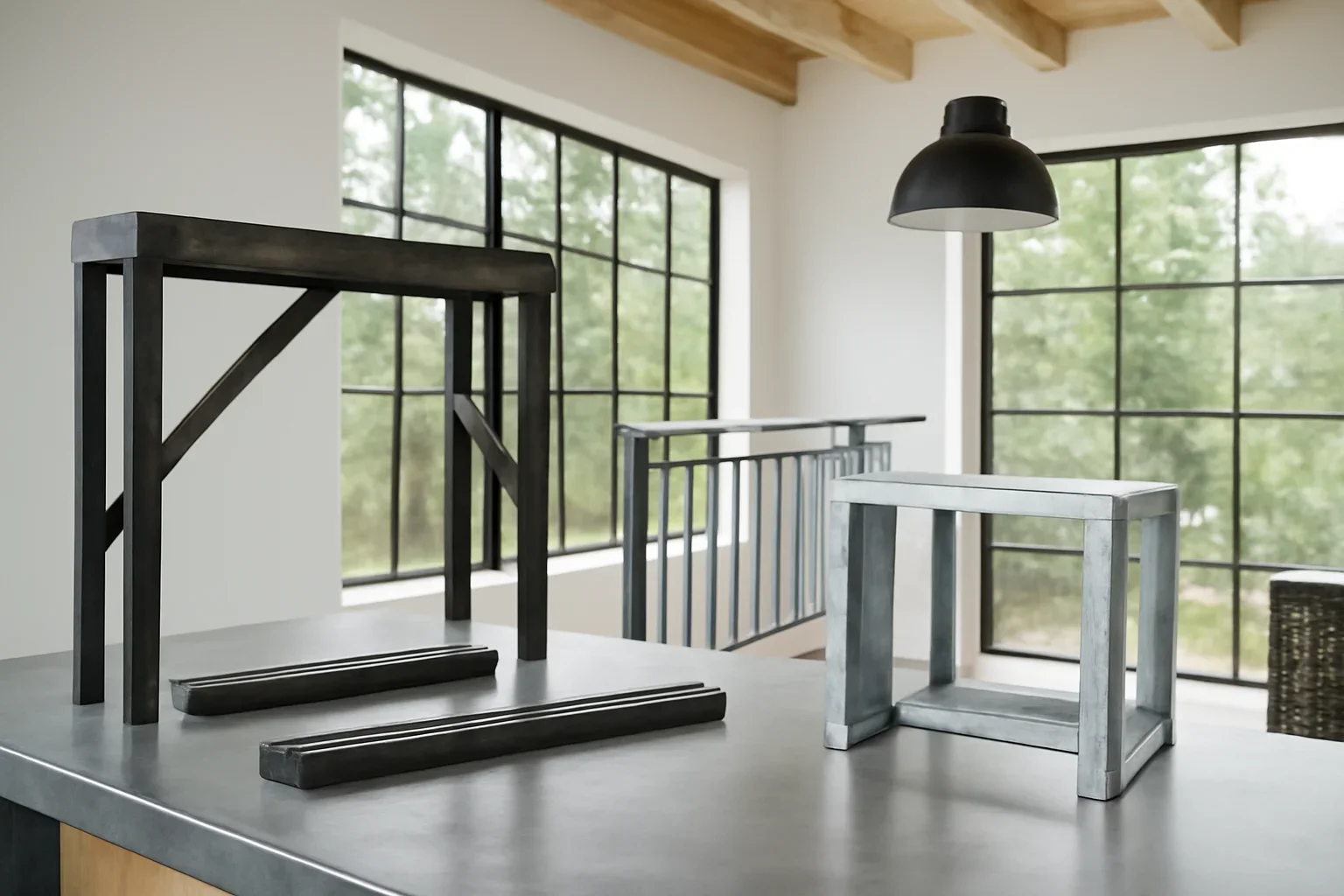
Comparison of custom fabricated metal details and prefab metal products for a Seattle architectural project
Which option is better?

Choose prefab for a simple standard condition. Consider custom fabrication when fit, proportion, finish, durability or architectural integration will affect the final result.

  • Standard opening Prefab may be sufficient
  • Unusual dimensions Custom usually fits better
  • Design-led project Custom provides more control
  • Fast basic replacement Prefab may move faster
At-a-glance comparison

How custom metalwork and prefab products differ

The right choice depends on more than the initial product price. Measurements, installation conditions, visual importance, material, finish and long-term use can all change which option delivers better value.

Custom metalwork

Designed around the real property and project

Custom fabrication starts with the actual dimensions, surrounding architecture, site limitations and performance requirements.

  • Built around field measurements, drawings and site conditions
  • More control over size, profile, spacing, material and finish
  • Better suited to visible architectural features and unusual openings
  • Can coordinate with stairs, decks, entries, walls, landscaping and adjacent finishes
  • Useful where standard products would require awkward fillers, cuts or compromises
Often best for

Feature stairs, railings, gates, canopies, doors, fences and one-of-a-kind architectural details.

Prefab metal products

Manufactured in standard sizes and configurations

Prefab products are made in repeatable sizes and styles, which can simplify purchasing when the project fits the available options.

  • Can be practical for straightforward, standard-size conditions
  • Product selection may be faster when inventory is available
  • Usually offers fewer choices for proportion, detailing and finish
  • May still require site modifications, adapters or installation adjustments
  • Can be less suitable when the metalwork is a major visual part of the property
Often best for

Utility-focused installations, standard replacements and lower-complexity applications where customization is not essential.

Detailed comparison

Compare fit, appearance, timing and long-term value

This comparison provides a practical starting point. The actual result still depends on the product, fabricator, installation method and condition of the site.

Decision factor Custom metalwork Prefab product
Dimensions Developed around the actual opening, site measurements and project details. Limited to available sizes, modules and adjustment ranges.
Design flexibility Greater control over shape, proportion, spacing, connection details and appearance. Limited to the manufacturer’s existing styles and configurations.
Finish selection Can be coordinated with the architecture, interior, exterior or nearby metalwork. Usually selected from a fixed range of factory finishes.
Site compatibility Can account for uneven surfaces, older construction, tight access and unusual transitions. Works best when the site closely matches standard product assumptions.
Initial timing Requires scope review, measurement, design, approvals and fabrication. May be faster when a suitable product is already available.
Initial cost Usually higher because the work is designed and fabricated for one project. May cost less initially for straightforward standard installations.
Architectural impact Better suited to prominent, design-sensitive and highly visible applications. Better suited to projects where function matters more than a tailored visual result.
Seattle project realities

Why local site conditions can make custom fabrication more useful

Properties across Seattle and the surrounding Puget Sound area can include older homes, sloped lots, narrow access, remodeled openings and exterior conditions shaped by regular rain and moisture exposure. These realities do not automatically require custom metalwork, but they can make a standard product harder to fit cleanly.

  • Older properties may have openings that are no longer square, level or consistent
  • Hillside lots and raised entries can create unusual stair, railing and gate conditions
  • Urban projects may need careful planning for delivery, staging and installation access
  • Exterior metalwork needs material and finish decisions appropriate for repeated moisture exposure
  • Renovations often require new metalwork to coordinate with existing construction rather than ideal dimensions

Local planning starts with the site

Share the project address, photos, approximate measurements and any drawings available. These details help identify whether a standard product is realistic or whether made-to-fit fabrication deserves a closer review.

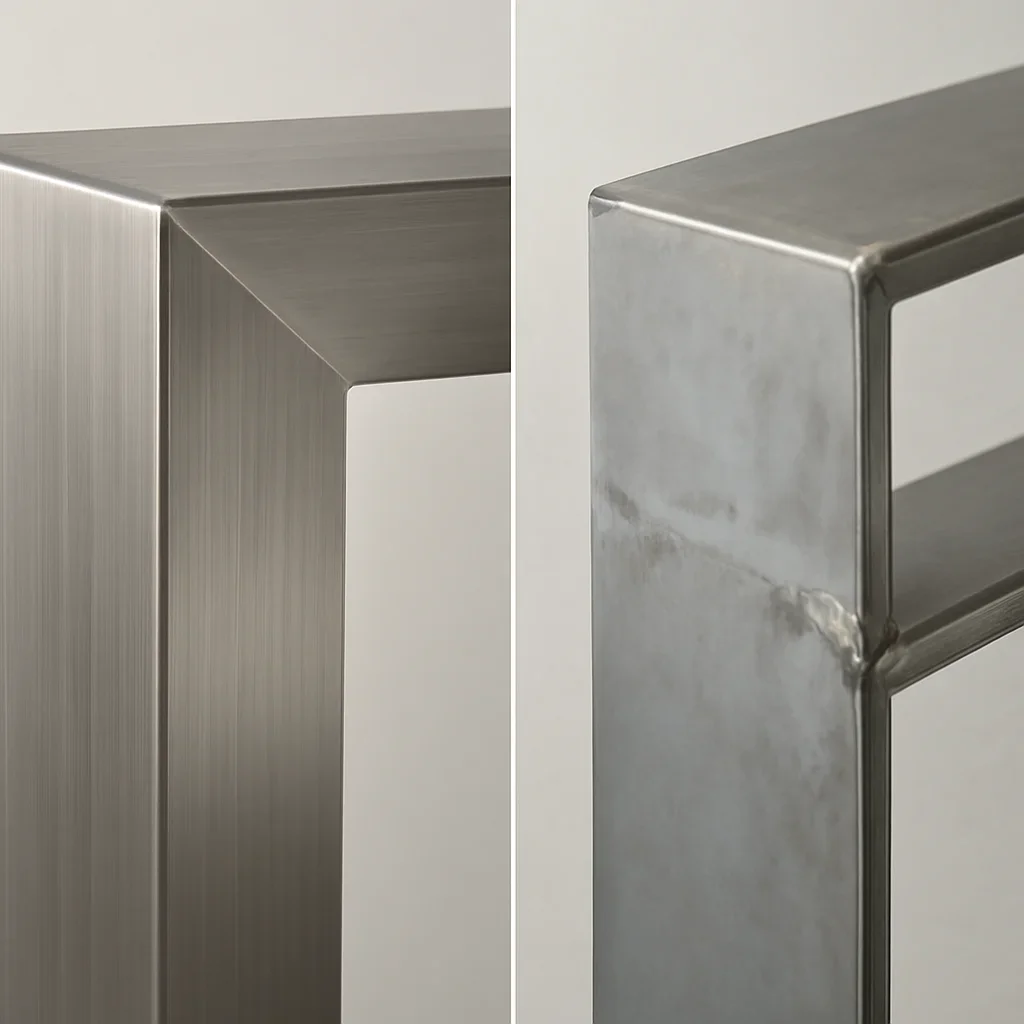
Close view comparing custom metal fabrication details, weld quality and finish consistency for a Seattle project
Decision framework

Four questions to ask before choosing custom or prefab

The decision becomes easier when it is tied to the real installation rather than a general list of advantages and disadvantages.

1

Are the dimensions standard?

Measure the opening, height, width, slope and connection points. Small irregularities can become significant during installation.

2

How visible is the metalwork?

A utility guard in a low-visibility area may not require the same design control as a feature stair, entry gate or storefront canopy.

3

What must it coordinate with?

Review nearby materials, architecture, finishes, doors, walls, decks, landscaping and existing metal components.

4

What compromises are acceptable?

Decide whether fillers, visible fasteners, fixed spacing, standard colors or on-site modifications would affect the result.

Cost and long-term value

Is custom metalwork more expensive than prefab?

Custom metalwork will often have a higher initial cost because it includes project-specific planning, measurement, detailing, fabrication and finish coordination. Prefab can cost less when a standard product fits without substantial modification.

The useful comparison is the complete installed result—not only the product price. Shipping, field modifications, adapters, installation labor, finish repairs and future replacement can affect the final difference.

Choosing by project type

When each option is likely to make sense

Neither option is automatically right for every project. The goal is to match the level of customization to the importance and complexity of the installation.

Custom metalwork may be worth considering when:

  • The opening or site dimensions are unusual
  • The feature is prominent in the architecture
  • The finish must coordinate with nearby materials
  • The project combines several connected components
  • A standard product would need visible modifications
  • Long-term fit and appearance matter more than speed alone

A prefab product may be practical when:

  • The application is straightforward and standard-size
  • The product will have limited visual impact
  • A suitable product is available without major changes
  • The installation does not require complex transitions
  • Fast replacement is more important than customization
  • The available finish and detailing already meet the need
Common questions

Custom metalwork vs prefab product FAQs

Direct answers to common questions from Seattle-area homeowners, architects, builders and commercial property teams.

Is custom metalwork always better than a prefab product?

No. A well-selected prefab product can be practical for a standard, utility-focused application. Custom fabrication becomes more valuable when dimensions, appearance, site conditions or architectural integration require greater control.

Is prefab metalwork always less expensive?

Not necessarily. The product itself may cost less, but shipping, adapters, field cutting, finish repairs and additional installation labor can increase the total project cost. Compare the complete installed result.

Can a prefab product be modified to fit?

Some prefab products can be adjusted, but the available modification depends on the product, material, connection method and manufacturer requirements. Excessive modification can reduce the cost or timing advantage.

When is custom metalwork worth the additional cost?

It is often worth considering when the feature is highly visible, the dimensions are unusual, the finish needs to match other materials, or a poor fit would affect safety, appearance or long-term use.

Does exterior metalwork in Seattle need special planning?

Exterior projects should account for moisture exposure, drainage, material selection, finish systems, connections and maintenance expectations. The right approach depends on the project location and how the metalwork will be exposed.

Do I need finished drawings before requesting a quote?

No. You can begin with photos, approximate measurements, inspiration images, an address and a description of the project. Drawings or field verification can be added when the scope requires more detail.

Can you help determine whether custom or prefab is the better fit?

Yes. Share the project type, location, dimensions, photos and design goals. The review can identify whether a standard product appears realistic or whether a custom fabrication path should be explored.

Get a project-specific answer

Not sure whether your project needs custom fabrication?

Send the project location, photos, approximate measurements, drawings and the options you are considering. The team can review the basic scope and help identify the most practical next step.

Include your Seattle-area project location, feature type, approximate dimensions and desired timeline when available.

Custom metalwork consultation reviewing drawings, material samples and finish options for a Seattle project