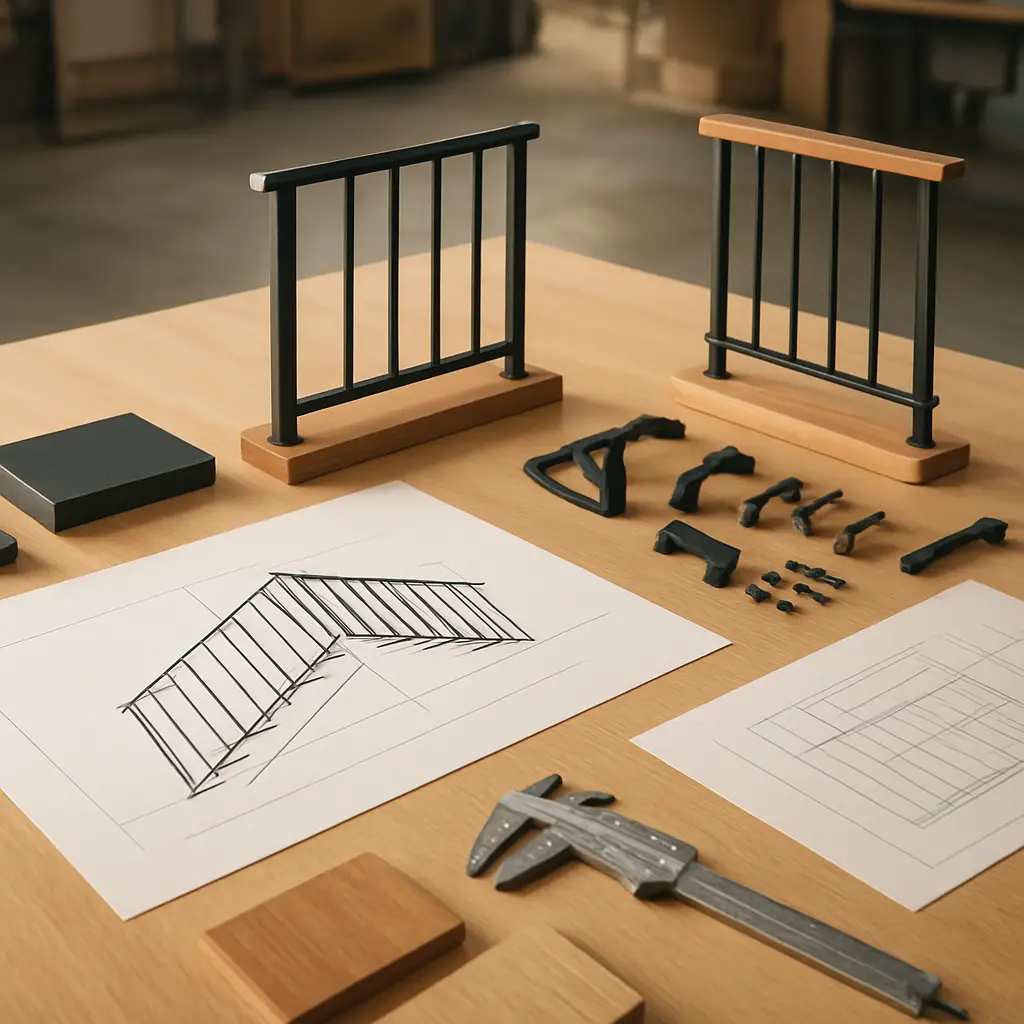
Steel can provide slimmer profiles
Steel can support visually lighter posts, pickets, frames, and handrail details when the design, member sizes, connections, and loads are properly coordinated.

Choosing between steel railings and wood railings is not simply a matter of deciding which material looks better. The right option depends on the architecture, location, daily use, required customization, surrounding materials, exterior exposure, maintenance expectations, installation conditions, and how prominently the completed railing will be seen.

Steel is often preferred when a project needs slim profiles, longer-lasting structural components, precise custom fabrication, open sightlines, or a contemporary architectural expression. Wood is often preferred when warmth, traditional detailing, straightforward carpentry, or coordination with existing wood stairs and trim is more important.
Neither material is automatically better for every interior or exterior application. The most suitable choice depends on the specific railing design, mounting conditions, exposure, finish system, budget, maintenance plan, and the quality of fabrication and installation.
Steel can support visually lighter posts, pickets, frames, and handrail details when the design, member sizes, connections, and loads are properly coordinated.
Wood can connect naturally with existing stairs, floors, trim, cabinetry, and traditional interiors while offering many species, stains, and profile choices.
Both materials require appropriate detailing and upkeep outdoors. Moisture, sun, snow, irrigation, drainage, fasteners, coatings, and surrounding materials all affect performance.
Steel and wood can both create attractive, functional railing systems, but they behave differently during design, fabrication, installation, finishing, and long-term use.
Before choosing a direction, compare the available material options for custom metalwork with the actual location, design goals, surrounding construction, exterior exposure, and maintenance expectations.
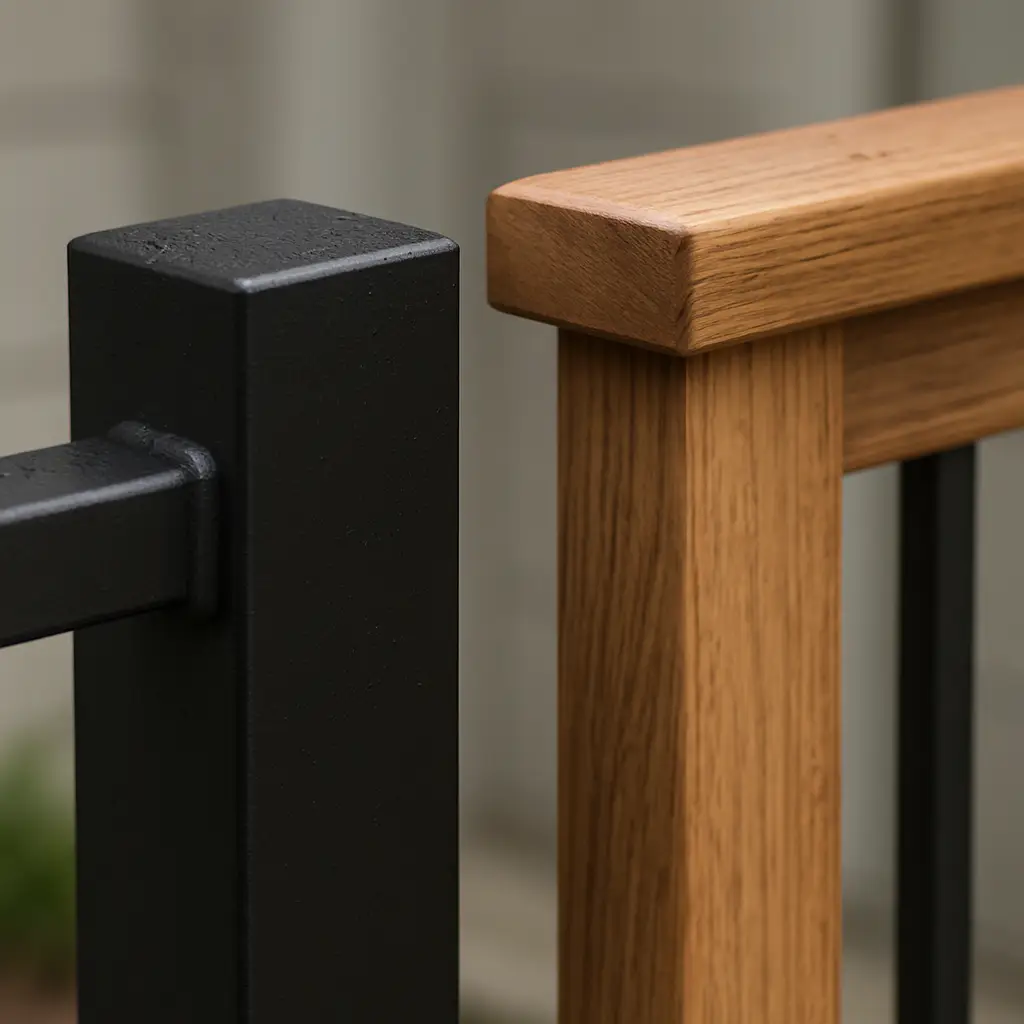
The decision does not need to be all steel or all wood. Mixed-material systems can combine a steel structure or pickets with wood treads and handrails, allowing the project to balance visual lightness with natural warmth.
Interior railing decisions are usually influenced by the staircase design, available space, sightlines, surrounding materials, level of daily hand contact, and how much of the system will be visible from other rooms.
Slim steel profiles can preserve light and visibility around stairwells, upper-level openings, mezzanines, and modern open-plan homes.
Wood can connect naturally with existing stair treads, flooring, doors, trim, built-in cabinetry, and other interior millwork.
Steel pickets with a wood top rail can provide a lighter guard while maintaining a warmer surface where people place their hands.
Glass can preserve views and daylight, while steel frames, channels, or posts define the system and coordinate its connections.
Detailed wood posts, rails, and balusters may suit homes where the staircase is expected to reinforce a traditional or historic interior style.
Both steel and wood can work for wall-mounted handrails. Grip comfort, brackets, clearance, returns, wall backing, and finish durability should guide the choice.
Exterior railings require a more detailed comparison because the material, coating, connections, fasteners, drainage, and surrounding construction are repeatedly exposed to weather.
Exterior railings in Seattle, Bellevue, Tacoma, Everett, Portland, Salem, and Eugene may experience repeated rain, shaded moisture, roof runoff, irrigation, moss, leaves, wet soil, and slow drying. Properties near saltwater may also face salt-influenced air or spray.
Spokane, Bend, Redmond, and other inland locations may add stronger summer sunlight, larger temperature changes, snow, ice, road spray, and freeze-thaw exposure. The same railing specification may not be equally suitable for every Washington or Oregon property.
There is no reliable lifespan comparison without considering material quality, design, finish, drainage, fasteners, installation, exposure, cleaning, inspection, and repair. Well-designed steel and wood systems can both provide long service, while poorly detailed versions of either material may deteriorate early.
Exterior steel depends on appropriate preparation and coating. Scratches, chips, damaged weld areas, trapped moisture, and exposed edges should be addressed before corrosion spreads.
Wood performs better when end grain, joints, lower components, and fastener locations do not remain chronically wet or trap moisture.
Posts, anchors, screws, brackets, welds, base plates, and mounting surfaces can become failure points regardless of the main railing material.
Wood can expand, shrink, split, warp, or check as moisture changes. Steel may expand and contract with temperature, but it behaves differently from wood.
Commercial, rental, exterior, and high-traffic railings may require stronger protection against repeated contact, equipment, furniture, and accidental impact.
An appropriate railing material can still perform poorly when mounted to weak, deteriorated, or unsuitable building surfaces.
Maintenance frequency depends on exposure, finish, color, surrounding landscape, cleaning practices, daily use, and how quickly damage is addressed.
The finish and maintenance guide provides additional planning context for cleaning, routine inspection, finish damage, exterior exposure, and deciding when professional repair may be appropriate.
Steel can be cut, formed, welded, framed, and fabricated into project-specific profiles, transitions, brackets, panels, pickets, and mounting solutions. This can be valuable when a railing must fit an unusual stair, curved opening, changing floor level, narrow edge, existing structure, or highly visible architectural space.
Vertical pickets, flat bars, screens, panels, and frames can be organized around the proportions of the stair or building.
Sloped stair rails, level guards, landings, corners, wall returns, and handrail terminations can be coordinated as one system.
Steel can be fabricated to receive or align with wood handrails, glass panels, stone caps, wood treads, concrete, and other project materials.
Wood is also highly customizable through carpentry, milling, shaping, turning, carving, staining, and painting. It may offer greater flexibility for traditional decorative profiles and direct coordination with existing millwork.
A dark steel finish can look different beside warm oak, cool stone, painted trim, clear glass, concrete, or exterior siding. Wood stain can also shift significantly depending on species, grain, preparation, age, and lighting.
Early finish coordination helps compare color, sheen, texture, material compatibility, exposure, visible welds or joints, touch-up expectations, and maintenance before the railing enters production.
Black, charcoal, bronze-inspired, and neutral coatings can create a controlled architectural outline when preparation and application match the use.
Stain can preserve visible grain and coordinate with flooring or treads, but color can vary by wood species and individual board.
Painted wood can coordinate with trim and traditional interiors, though joints, wear areas, and moisture exposure may require periodic attention.
Either material can be the more expensive option depending on the design. A simple wood railing may cost less than a fully custom steel-and-glass system, while a detailed hardwood balustrade with extensive custom millwork may cost more than a straightforward steel railing.
Curves, custom transitions, decorative patterns, concealed connections, glass, unusual profiles, and complex stairs can increase design and production work.
Steel profile sizes, stainless steel, hardwood species, glass, hardware, coating systems, stains, and paints can significantly change the total.
Removal, difficult access, occupied buildings, weak mounting surfaces, floor protection, lifting, scaffolding, and field modification may affect installation cost.
More complex or architecturally significant projects may require deeper design documentation, coordination, review, and project-specific engineering.
Long-term value should consider cleaning, refinishing, coating repair, component replacement, and the owner's willingness to complete routine upkeep.
A higher initial cost may provide better value when the material, design, finish, and installation are suited to the property and intended use.
Yes. Mixed-material railings are common because they can combine the strength and visual lightness of steel with the warmth and tactile quality of wood.
Identify whether the railing is indoors, covered outdoors, fully exposed, near saltwater, beside irrigation, or subject to snow and road spray.
Decide whether the project should feel visually light, warm, traditional, contemporary, decorative, minimal, or coordinated with existing materials.
Confirm the stair, deck, porch, floor, wall, landing, edge, and mounting surfaces that must support the railing.
Evaluate posts, rails, infill, handrails, glass, brackets, fasteners, finish, installation, and maintenance instead of comparing the main material alone.
Compare real steel finish and wood stain samples beside the project's flooring, treads, stone, glass, paint, and exterior materials.
Choose the material and finish only after understanding the cleaning, inspection, repair, refinishing, and component-replacement requirements.
A simple steel railing and a detailed wood balustrade are not equivalent systems. Compare the complete proposed assemblies.
The railing can only perform as intended when the stairs, deck, walls, framing, slabs, or landings provide suitable connections.
Exterior steel still needs cleaning, inspection, coating care, drainage management, and timely repair of finish damage.
Wood species, grade, moisture content, preparation, construction details, fasteners, coating, and exposure can produce very different results.
Online references do not accurately show real profile size, texture, sheen, undertone, grain variation, or appearance under project lighting.
Coatings, fasteners, brackets, joints, drainage points, and replaceable components should remain accessible after installation.
A useful project package helps a fabricator or project team evaluate appearance, feasibility, exposure, installation, and long-term care rather than recommending a material in isolation.
Steel has different structural properties from wood and can support slimmer custom profiles in many designs. The performance of either railing depends on member sizes, connections, mounting surfaces, engineering, fabrication, and installation.
Maintenance depends on the specific material, finish, exposure, design, and use. Exterior wood may need periodic sealing, staining, or painting, while exterior steel needs coating inspection and timely repair when damage occurs.
Steel may be preferable for slim profiles, custom fabrication, and open views, while wood may better match an existing deck or traditional architecture. Both require suitable exterior detailing and maintenance.
Wood can work especially well when the railing should match existing treads, flooring, trim, cabinetry, or a traditional interior. Steel may be better when the goal is a slimmer or more contemporary system.
Yes. The stair structure, treads, stringers, floors, landings, blocking, and attachment points should be evaluated so the new railing can be mounted securely.
Yes. This combination can preserve warmth and grip comfort while using steel to create a visually lighter guard. Connections and material movement should be coordinated.
Steel can corrode when exposed to moisture and oxygen, especially where protective coatings are damaged or water remains trapped. Appropriate preparation, coating, drainage, cleaning, inspection, and repair help manage the risk.
Wood can deteriorate when it remains wet or when coatings, joints, fasteners, end grain, and drainage are not properly maintained. Suitable material selection and regular care are important.
Cost depends on design complexity, material, profile, finish, glass, hardware, drawings, engineering, site conditions, removal, delivery, and installation. Either material can be the more expensive option.
The best choice depends on the exact property and exposure. Rain, shaded moisture, salt-influenced air, irrigation, snow, sun, road spray, and maintenance preferences should be considered.
Share what you are planning, where the project is located, and whether the railing will be inside, covered, or fully exposed. Include photographs, approximate dimensions, surrounding materials, design references, and the maintenance level you are comfortable with.
Share your project type, location, railing application, exposure, approximate dimensions, preferred appearance, surrounding materials, and project stage.