Seattle metalwork comparison

Ornamental vs decorative metal fabrication

Ornamental and decorative metalwork overlap, but the terms describe different design priorities. Ornamental fabrication typically emphasizes crafted detail, repetition, scrollwork, motifs or traditional visual language. Decorative metal fabrication is broader and can include modern screens, geometric panels, feature walls, entries and other metal elements whose primary role is to strengthen the architecture visually.

  • Traditional and contemporary styles
  • Interior and exterior applications
  • Seattle and Pacific Northwest context
  • Custom materials, patterns and finishes
Ornamental and decorative metal fabrication concepts being compared for a Seattle architectural project
What is the main difference?

Ornamental metalwork usually emphasizes crafted detail, motif and traditional character. Decorative metalwork is a broader category that can be ornate, geometric, minimal or highly contemporary.

  • Crafted traditional detail Often described as ornamental
  • Modern visual enhancement Often described as decorative
  • Functional feature with style Either term may apply
  • Final project definition Depends on design intent
At-a-glance comparison

How ornamental and decorative metalwork differ

The distinction is not always rigid. A custom gate can be both ornamental and decorative, while a clean laser-cut screen may be decorative without using traditional ornament.

Ornamental metal fabrication

Detail-led metalwork with visible craft and character

Ornamental fabrication often uses repeated shapes, curves, forged details, traditional motifs or handcrafted elements to give a feature a distinctive visual identity.

  • Often associated with scrolls, pickets, rosettes, decorative borders and patterned infill
  • Can reference historic, traditional, European, craftsman or estate-style design language
  • Commonly used for gates, railings, fences, balconies and statement entry features
  • May combine forging, welding, bending, casting and detailed fabrication
  • Usually places strong emphasis on rhythm, proportion and visible craftsmanship
Often considered for

Custom gates, decorative railings, estate fencing, balcony details, traditional entries and feature metalwork with a handcrafted appearance.

Decorative metal fabrication

A broader category for metalwork designed to add visual impact

Decorative fabrication includes traditional ornament, but it also covers minimal, geometric and contemporary metal features created to improve a building or interior visually.

  • Can be traditional, modern, abstract, geometric or highly minimal
  • Commonly used for screens, panels, dividers, façades, signage surrounds and feature walls
  • May use laser-cut patterns, perforated metal, folded panels or custom welded assemblies
  • Can serve visual, privacy, shading, screening or wayfinding purposes
  • Often integrates directly with the broader architectural concept
Often considered for

Modern screens, privacy panels, commercial interiors, façade features, branded entries and contemporary architectural accents.

Detailed comparison

Compare style, purpose, fabrication and project fit

The correct label matters less than defining the visual goal, material, performance requirements, finish and relationship to the surrounding architecture.

Decision factor Ornamental metalwork Decorative metalwork
Primary design emphasis Crafted detail, motifs, repetition, texture and visible artisan character. Visual enhancement within the broader architecture or interior design.
Typical style range Traditional, historic, craftsman, estate-style or highly detailed custom work. Traditional, contemporary, geometric, abstract, minimal or branded.
Common applications Gates, fences, railings, balconies, entry details and handcrafted accents. Screens, panels, façades, dividers, feature walls, entries and privacy elements.
Fabrication methods Welding, forming, bending, forging, casting and detailed component assembly. Welding, folding, laser cutting, perforating, forming and modular panel fabrication.
Functional role Often combines security, guard, enclosure or access functions with detailed decoration. May provide privacy, screening, shading, separation, branding or visual emphasis.
Design development May require careful motif development, scale review and handcrafted sample details. May require pattern studies, digital modeling, panel layouts and architectural coordination.
Finish considerations Finish should preserve fine details while protecting joints, edges and recessed areas. Finish should support large surfaces, cut edges, exterior exposure and the intended visual effect.
Cost drivers Detail density, handwork, repeated components, forming, assembly time and finishing complexity. Panel size, pattern complexity, digital cutting, material usage, framing and installation.
Seattle and Pacific Northwest context

Local architecture supports both crafted detail and contemporary metal design

Seattle-area projects range from older craftsman homes and historic commercial buildings to modern infill, contemporary residences and mixed-use developments. That variety means ornamental and decorative metalwork can both be appropriate, but the design should respond to the actual building rather than applying a generic pattern.

  • Craftsman and traditional homes may benefit from restrained ornamental details that respect the existing architecture
  • Modern homes often use geometric screens, clean panels and simplified metal patterns
  • Commercial entries may need metalwork that supports branding, visibility, security and daily use
  • Exterior projects should account for rain, drainage, finish protection and access for maintenance
  • Urban sites can require careful planning for field measurements, delivery and installation access

Begin with the architecture and use case

Share the project location, building style, photos, dimensions, desired privacy level and inspiration images. These details help define whether the work should feel ornamental, decorative, architectural or a combination of all three.

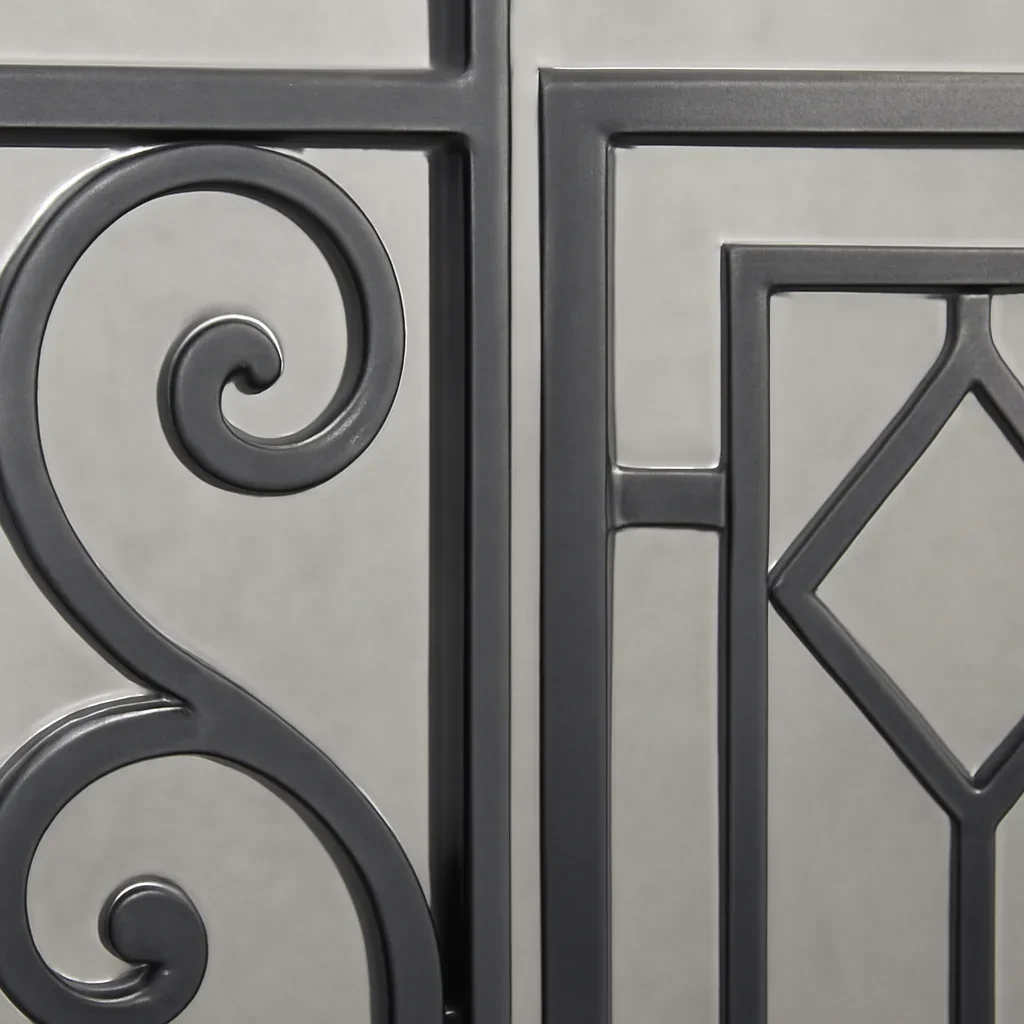
Close view of ornamental and decorative metal fabrication showing precise patterns, welds and finish details
Decision framework

Four questions that can clarify the right design direction

The most useful conversation is not simply about which label to use. It is about what the metalwork needs to communicate, do and withstand.

1

What visual language fits the building?

Decide whether the work should feel traditional, crafted, geometric, minimal, expressive or integrated quietly into the architecture.

2

Is the feature mainly visual or also functional?

Clarify whether it must provide security, privacy, fall protection, shading, screening, access control or enclosure.

3

How much detail is appropriate?

Review the viewing distance, scale, surrounding materials and whether fine details will remain visible after finishing and installation.

4

What maintenance can the project support?

Consider exposed edges, recessed areas, water collection, cleaning access, coating repair and future finish upkeep.

Cost and fabrication scope

Which type of metalwork costs more?

Neither category is automatically more expensive. Ornamental work can become costly when it includes extensive hand forming, repeated detailed components or complex assembly. Decorative metalwork can also carry substantial cost when it involves large panels, intricate digital patterns, structural frames or challenging installation.

Compare the complete scope, including design development, drawings, material, fabrication, finishing, delivery and installation—not only the visible metal surface.

Choosing by project goal

When ornamental or decorative metalwork may fit best

Many successful projects use elements of both. These examples help clarify the dominant direction without limiting the final design.

Ornamental metalwork may be a stronger fit when:

  • The architecture has traditional or historic character
  • The design uses motifs, scrolls or repeated details
  • Visible handcraft is part of the project value
  • The feature is a gate, railing, fence or balcony
  • The design should feel established or estate-like
  • Fine detail is intended to be viewed up close

Decorative metalwork may be a stronger fit when:

  • The architecture is modern or highly contemporary
  • The feature uses geometry, abstraction or minimal lines
  • The metalwork provides privacy, screening or branding
  • The design includes panels, façades or room dividers
  • Digital pattern development is part of the concept
  • The feature must integrate with a larger design system
Common questions

Ornamental vs decorative metal fabrication FAQs

Practical answers for Seattle-area homeowners, architects, designers, builders and commercial property teams.

What is the difference between ornamental and decorative metalwork?

Ornamental metalwork usually emphasizes crafted detail, motifs, repetition and traditional visual character. Decorative metalwork is a broader category that includes both ornate designs and contemporary elements created primarily to improve visual impact.

Can a project be both ornamental and decorative?

Yes. A custom gate, railing or screen can include ornamental details while also serving a broader decorative role within the architecture. The terms often overlap in real projects.

Is ornamental metalwork always traditional?

No. Ornamental work can use contemporary forms, but the term usually suggests a stronger emphasis on visible detail, pattern or craftsmanship than a purely minimal metal feature.

What are common decorative metal fabrication projects?

Common projects include privacy screens, laser-cut panels, room dividers, façade elements, decorative fences, entry features, feature walls and custom architectural accents.

Which materials can be used for decorative metalwork?

Steel, stainless steel and aluminum are common choices. The better option depends on the design, location, exposure, structural needs, finish and maintenance expectations.

How should exterior decorative metalwork be planned for Seattle weather?

Exterior work should account for repeated moisture, drainage, exposed edges, recessed details, coating coverage, attachment points and access for future inspection or finish repair.

Do I need finished drawings before requesting a quote?

No. You can begin with photos, rough dimensions, inspiration images, the project address and a description of the feature. Detailed drawings, modeling or samples can be developed when the scope requires them.

Can you help define the right style for our project?

Yes. Share the building style, project location, intended function, photos, measurements and visual references. An initial review can help clarify whether the project should lean ornamental, decorative, architectural or combine those directions.

Define the right design direction

Planning a custom ornamental or decorative metal feature?

Send the project location, photos, approximate dimensions, architectural style, functional requirements and inspiration images. The team can review the initial scope and help identify the most useful next step.

Include whether the metalwork is interior or exterior, the Seattle-area project location, desired function, approximate size and any available drawings or design references.

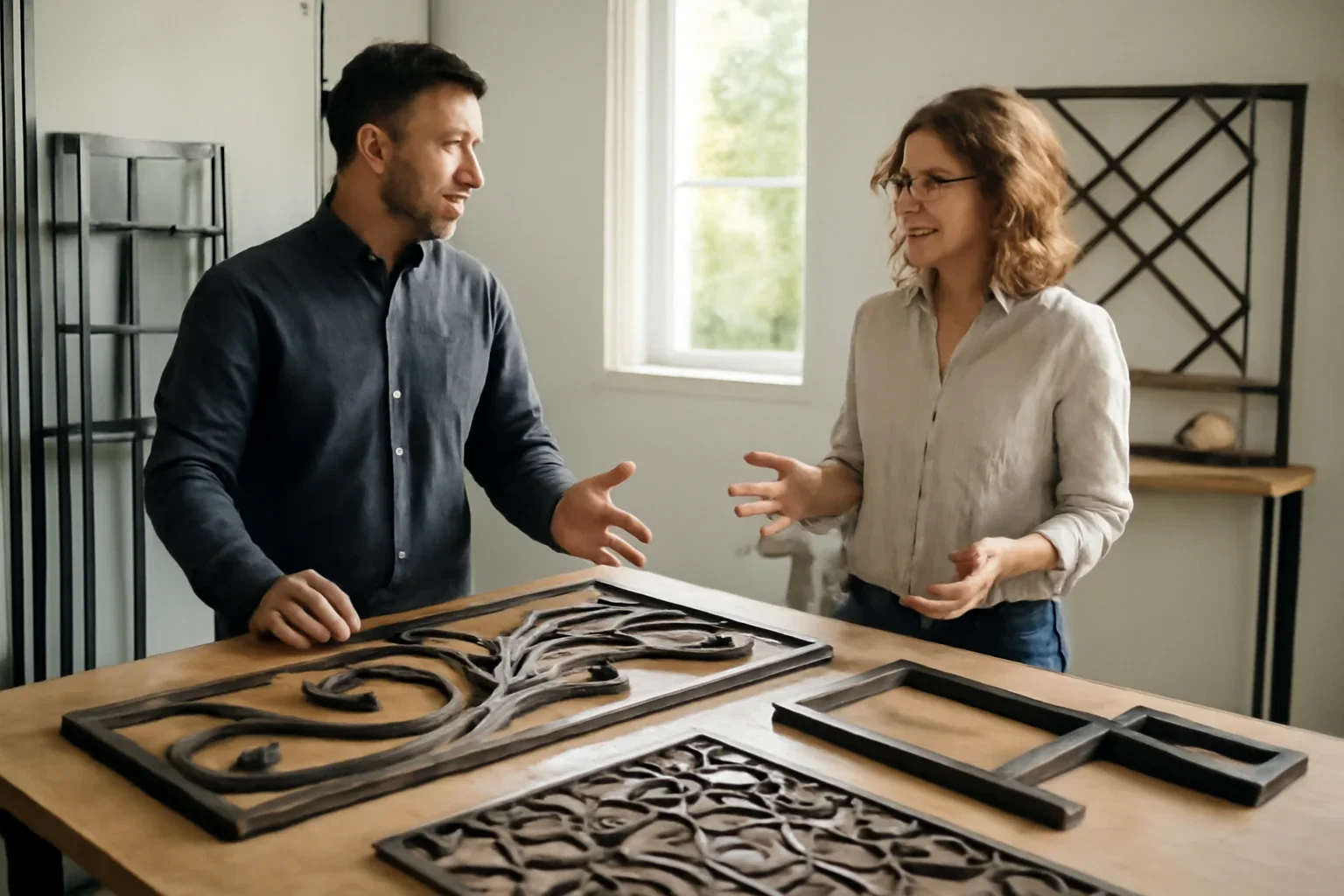
Ornamental and decorative metal fabrication consultation with drawings, patterns and finish samples